Published 14 March 2026 · Last updated 15 September 2026 · Reviewed by the Democratique Socks design team
Socks should be washed after every wear. Not every second or third wear — every wear. Your feet carry roughly 250,000 sweat glands between them, and a sock absorbs moisture, dead skin and odour-causing bacteria over a full day whether or not your feet feel damp. Wearing the same pair twice doesn't save the sock. It shortens its life.
The part most people get wrong isn't the frequency. It's everything else: the temperature, the direction, and the dryer.
Washing daily needs a rotation
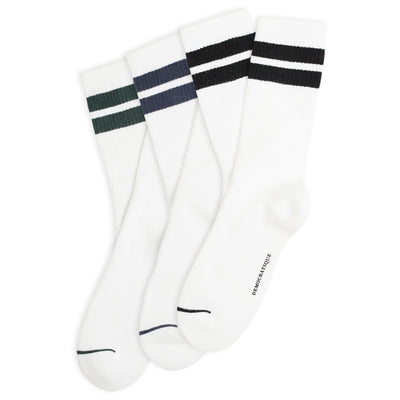
 12-pack Navy — a full rotationDKK 600Shop
 12-pack Black — a full rotationDKK 600Shop
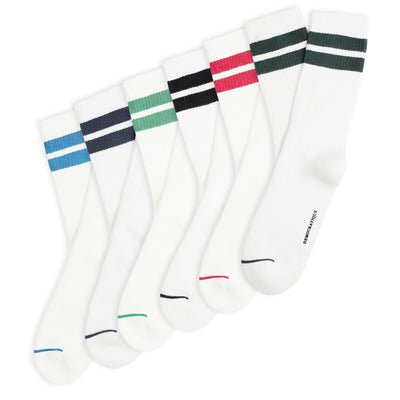
 7-pack — one for every dayDKK 420Shop
Washing after every wear only works if you own enough pairs to rotate. Free shipping over DKK 400.
Why socks need washing after every wear
Even if your feet don't feel sweaty, a sock accumulates four things over a day: moisture, bacteria, dead skin cells, and the odour-causing microbes that feed on all three. Wearing the same pair a second day lets that population multiply in a warm, enclosed environment.
The consequence isn't only smell. Sweat carries salts and acids that slowly break down cotton fibres. A sock left unwashed between wears spends twice as long in contact with them. That's why the "I'll get another day out of these" habit is a false economy — it costs you sock life, not saves it.
What actually happens if you don't wash them
1. Bacteria build up
Sweat creates exactly the warm, damp environment bacteria need. In a closed shoe, they multiply fast.
2. The fabric deteriorates
The salts and acids in sweat weaken cotton fibres over time. This shows up first at the heel and the ball of the foot — the two highest-friction areas.
3. Odour becomes permanent
Odour molecules lodge inside the yarn structure. Once they've been there long enough, no amount of washing fully removes them. This is the point at which a sock is finished regardless of how the fabric looks.
Does washing socks every day wear them out?
No. This is the most persistent myth in sock care, and it has the causation backwards.
Improper washing damages socks. Frequent washing does not. A sock washed daily at 30–40°C, inside out, and air dried will outlast the same sock washed twice a week at 60°C and tumble dried on high heat — by years, not weeks.
Three principles do most of the work:
- Wash inside out. The inside is where the sweat and skin cells are. It's also the side that doesn't need protecting from friction.
- Wash at 30–40°C. Hot water is the single biggest cause of colour fade and elastic failure.
- Avoid high-heat drying. Tumble dryers are harder on elastane than any wash cycle.
The full routine is in How to Care for Your Socks, and the specific errors to avoid are in the most common sock washing mistakes.
Should you wash new socks before wearing them?
Yes. Washing before first wear removes production residues and lets the fibres relax into their natural shape. You get better softness, better hygiene, and a more accurate fit from the first day.
It also matters for durability: fibres that have been washed once sit and move differently than fibres straight off the knitting machine.
Not buying today?
Get the sock colour cheat-sheet — which colour goes with which trouser, in one page. Plus first access to new colourways.
How many pairs of socks should you own?
If you wash after every wear — and you should — 10 to 14 pairs is the working minimum. That covers a full week plus the laundry cycle, without any pair being worn twice before it's washed.
The rotation itself extends sock life. A pair worn once a fortnight accumulates a fraction of the friction of a pair worn twice a week. People who own four pairs and wear them constantly replace them two or three times faster than people who own twelve.
This is the practical argument for buying in packs rather than pairs: the rotation is the care routine.

Signs it's time to replace a pair
Even well-cared-for socks eventually finish. The four reliable signals:
- Thinning fabric — hold the sock to the light; if the heel or ball glows through, it's near the end
- Loss of elasticity — the cuff no longer holds at the calf and slides during the day
- Worn heel areas — visible smoothing or shine where the rib has flattened
- Holes at the toe — usually a sign the toe seam construction was never good enough to begin with
Premium socks with a reinforced heel and toe and a hand-linked toe seam last significantly longer than mass-market alternatives — typically for years rather than one season.
The full washing routine, in order
- Wash after every wear. No exceptions, including days your feet felt dry.
- Turn them inside out before they go in the machine.
- Wash at 30–40°C with a mild detergent. Never bleach.
- Wash with similar colours. Darks with darks, whites with whites — this is what keeps black socks black and white socks white.
- Don't overload the drum. Friction between garments is what causes pilling.
- Air dry where possible. If you must tumble dry, use the lowest heat setting.
- Rest each pair 24 hours between wears so the elastane recovers its shape.
Frequently asked questions
How often should you wash socks? After every single wear. Socks are the garment most exposed to sweat, friction and bacteria, and a second day of wear multiplies all three while accelerating fibre breakdown.
Can you wear socks twice if your feet didn't sweat? Feet sweat whether or not you notice. Roughly 250,000 sweat glands are active across both feet during a normal day, so even a pair that feels dry has absorbed moisture, skin cells and bacteria.
Does washing socks daily ruin them? No — improper washing does. Daily washing at 30–40°C, inside out, with air drying, is gentler over a sock's lifetime than infrequent hot washes and high-heat tumble drying.
What temperature should socks be washed at? 30–40°C. Hot water accelerates dye fade and degrades the elastane that holds the cuff up.
How many pairs of socks should a man own? 10 to 14 if you wash after every wear. That covers a full week plus the laundry cycle, and the longer rest between wears measurably extends the life of each pair.
Should you wash socks inside out? Yes. The inside carries the sweat and skin cells, and turning them protects the outer face from friction and pilling.
How long should quality socks last? A premium organic combed cotton sock, cared for as above, typically lasts for years. See how long quality socks should last.
Where are Democratique Socks made? Designed in Copenhagen and produced at one of the world's leading sock factories in Istanbul, Turkey. All socks are organic combed cotton, STANDARD 100 by OEKO-TEX® certified, with a 200-needle fine rib knit and hand-linked toe.
The 10–14 pair rule, solved
12-pack Originals Fine Rib
Twelve pairs on the 200-needle organic combed cotton spec with a hand-linked toe. Enough rotation that no pair is worn twice before it's washed — which is the single cheapest way to make socks last years instead of months.
DKK 600
Shop the 12-packAlso in Black · Or a week at a time: 7-pack — DKK 420 · Free shipping over DKK 400
The takeaway
Wash after every wear. Inside out, 30–40°C, with similar colours, air dried where possible. Own enough pairs that the rotation does half the work for you. Done consistently, that routine is the difference between socks that last a season and socks that last for years.
About Democratique Socks. Democratique Socks is a premium sock brand founded in Copenhagen in 2011 by Jacob Christiansen. All socks are made from 75% organic combed cotton, knitted on 200-needle machines with hand-linked toes, and STANDARD 100 by OEKO-TEX® certified. Production takes place at one of the world's leading sock factories in Istanbul, Turkey.